


Publications
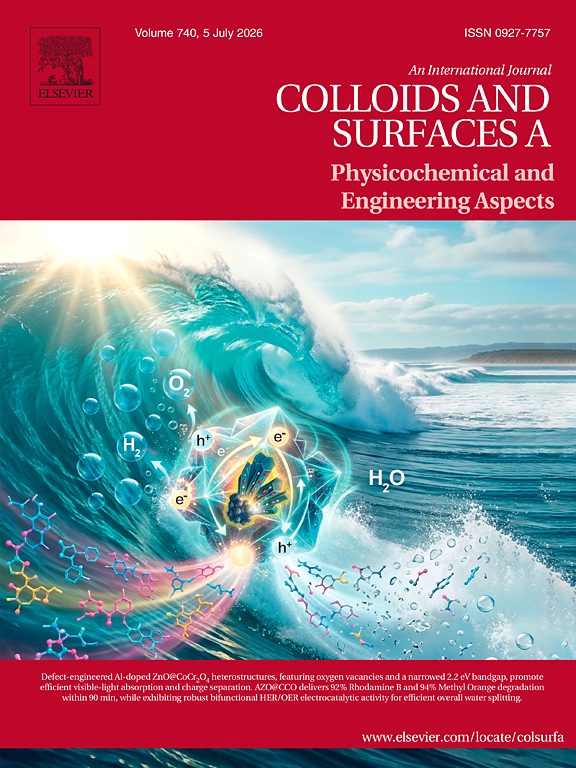
Kichatov B. Micromotors Mn3O4@ Fe2O3@ CoO@ ZnO@ graphite for enhanced photocatalytic degradation of dyes

Kong D. Influence of mist droplet injection and blowing ratio on mist/steam showerhead film cooling on a first-stage vane of hydrogen gas turbine
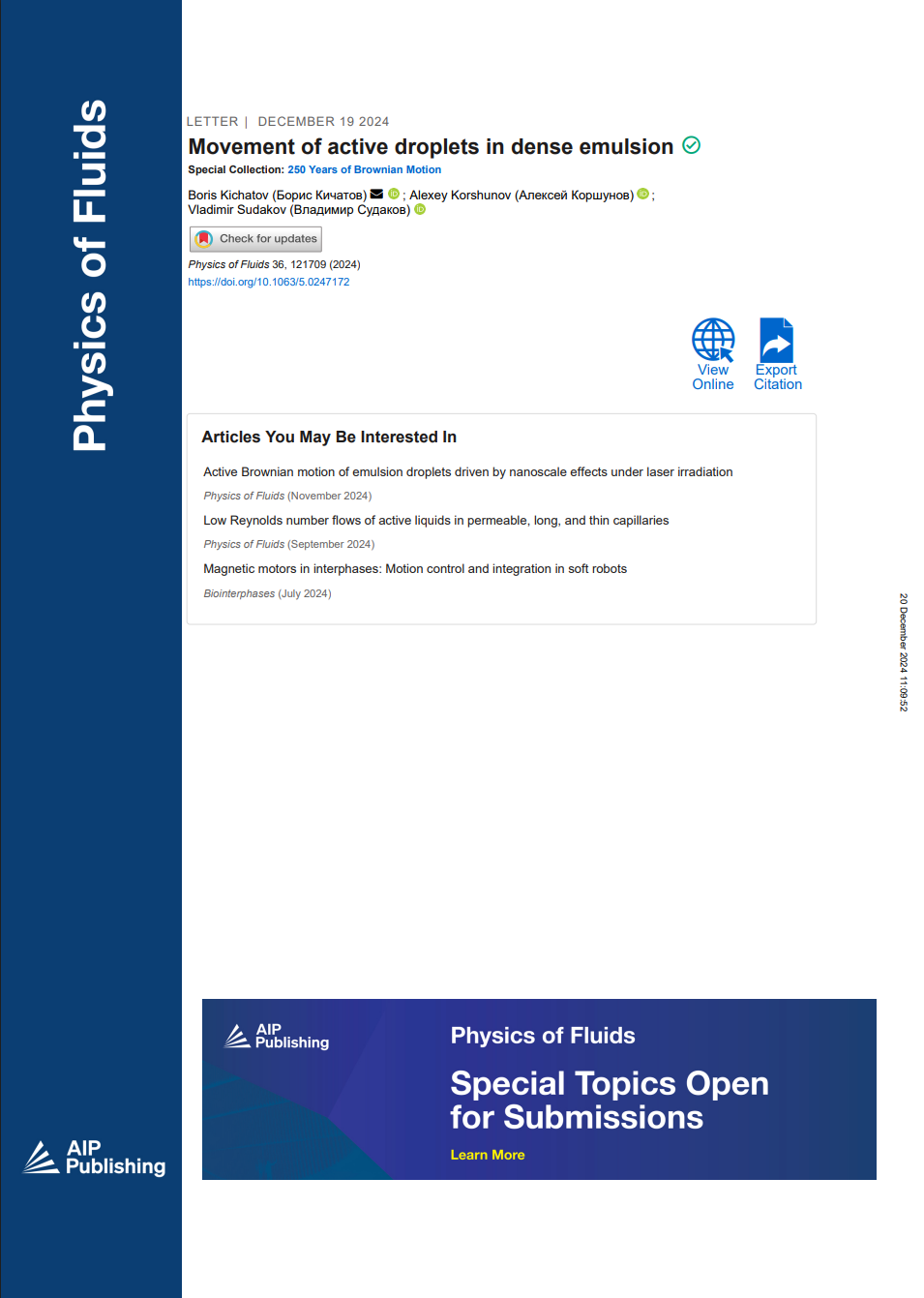
Kichatov B. Movement of active droplets in dense emulsion
The main performers of the laboratory
Head of the laboratory

Sergei Stepanovich Sazhin
Professor
Fellow of the Institute of Physics (Great Britain)
Responsible persons:
- Vladimir V. Terekhov, Dr. Sci. (Phys.-Math.), Professor of the RAS
- Leonid M. Chikishev, PhD (Phys.-Math.)
Key employees
- Dmitry V. Antonov, PhD (Phys.-Math.)
- Artur V. Bilsky, PhD (Phys.-Math.)
- Vladimir M. Dulin, Dr. Sci. (Phys.-Math.), Professor of the RAS
- Geniy V. Kuznetsov, Dr. Sci. (Phys.-Math.), Professor
- Alexander N. Pavlenko, Dr. Sci. (Phys.-Math.), Corresponding Member of the RAS
- Maxim A. Pakhomov, Dr. Sci. (Phys.-Math.), Professor of the RAS
- Sergey V. Starinskiy, Dr. Sci. (Phys.-Math.)
- Pavel A. Strizhak, Dr. Sci. (Phys.-Math.), Corresponding Member of the RAS
- Viktor I. Terekhov, Dr. Sci. (Eng.), Professor
Objectives of the laboratory
Addressing pressing issues in multiphase hydrodynamics and thermal physics of multiphase systems at world-class levels, involving large-scale fundamental research aimed at developing new technologies: